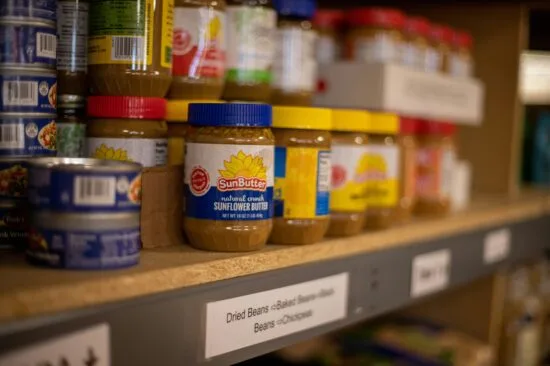
Food & Support for Wayne County Residents
Across Wayne County, trusted local partners are ready to welcome neighbors with dignity, care, and compassion.
Black leaders and organizations have played a foundational role in advancing food security and shaping the broader movement to end hunger in America. From mutual aid networks formed during and after enslavement to Black church–led food pantries, cooperatives, and school feeding efforts of the 20th century, Black communities have long addressed hunger where public systems failed.
We're celebrating just a few of the 'Hunger Relief Heroes' in our network who go above and beyond to nourish families facing food insecurity.
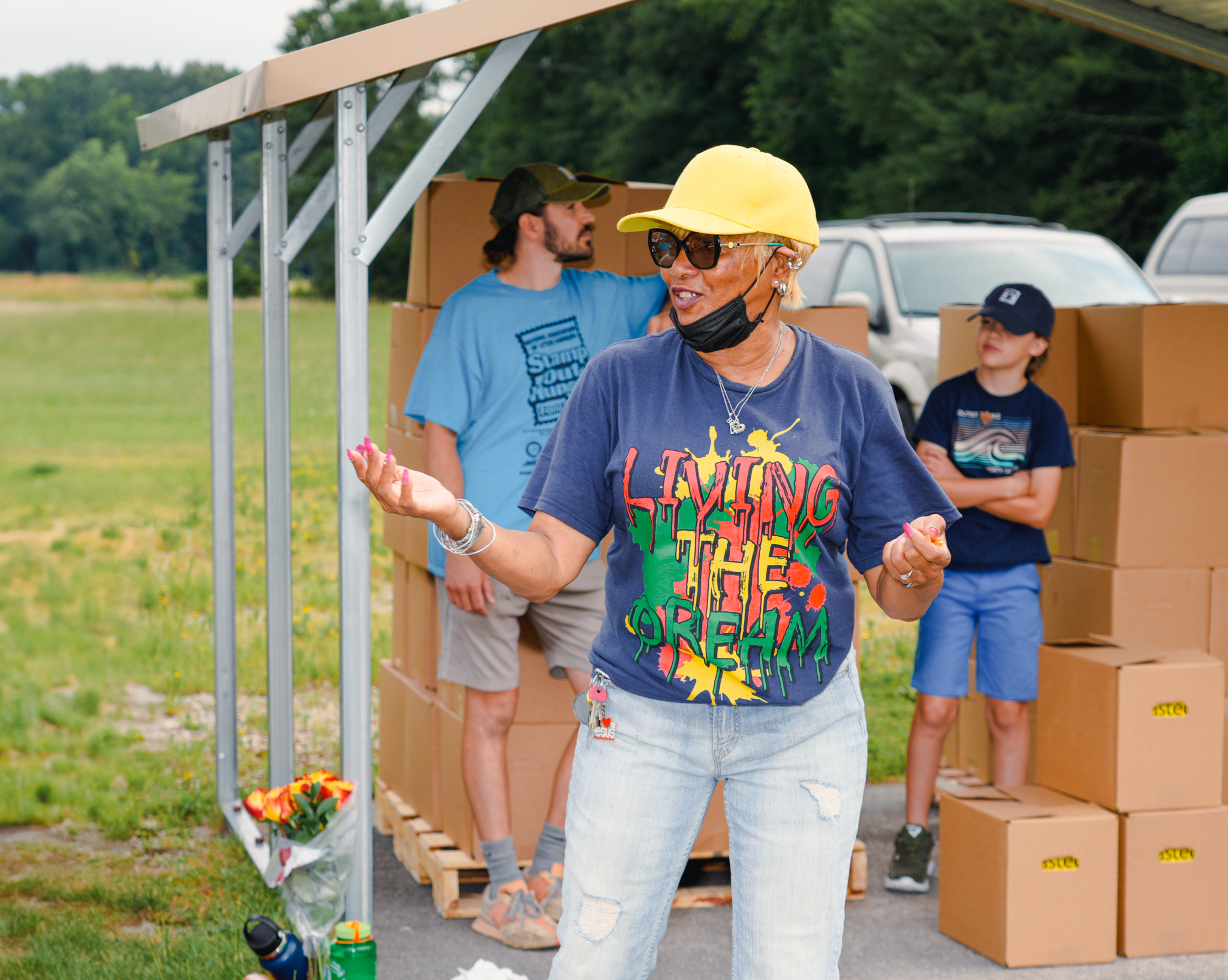
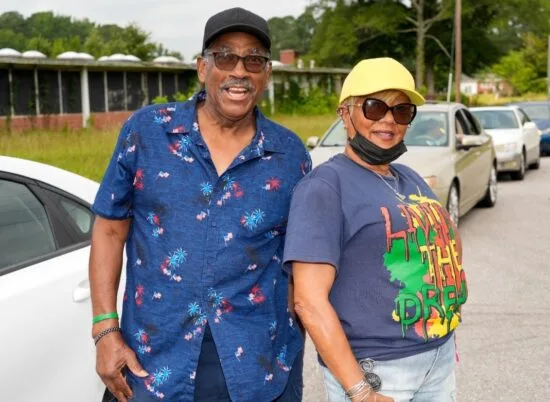
Each month, hundreds of vehicles pull through the lot of the old Inborden School in Halifax County to participate in the Commodity Supplemental Food Program — providing a healthy supply of fresh vegetables, fruit, dairy, whole grains, and pantry staples to people on fixed incomes who are at least 60 years old.
This vital resource is made possible by volunteers like Joyce Bobbit – known to longtime Enfield residents as “Cookie.” She is a fixture at our senior food box distribution, where she greets seniors like family. Rain or shine, Cookie’s been a presence at almost every distribution in Enfield for more than eight years, with only one date postponed by a hurricane. .
– Joyce "Cookie" BobbitI know practically everybody that comes through this line, and they know me. That connection makes people feel comfortable. It gives folks the space to ask for help when they need it.
The tight-knit Enfield community can make food distributions feel like a class reunion. Many seniors were students of Inborden High School, where Cookie attended through her teenage years. Food insecurity has risen sharply in the decades since, with nearly one in three seniors now living at or below the state’s poverty line.
With no full-service grocery store in the area, many Enfield residents rely on senior food box distributions. Cookie's presence in Enfield has made local resources much more accessible.
Read More About Cookie & Senior ProgramsOur partners Stanley Hughes and Linda Leach-Hughes represent the rich legacy of Black farmers who fought for land access and cultural foodways. The Hughes family has owned and operated Pine Knot Farms for over 110 years. This farm is the site of both tradition and innovation as the first African American-owned farm to be certified organic in 1996. Mr. Hughes, a third-generation farmer, was born and raised on Pine Knot Farms. The same land that nourished his family now provides tens of thousands of meals each year for families facing hunger.
Produce from Pine Knot Farms is celebrated as some of the best in the country. Their collards, sweet potatoes, and tobacco are grown the "old-time way" with organic fertilizer and natural pest control. And through their partnership with the Food Bank, Pine Knot Farms feeds 180 families per week in the historic Hayti community in Durham. Mrs. Leach-Hughes explained what this has meant for seniors, in particular.
– Linda Leach-Hughes Pine Knot FarmsWe found out recently that some of these senior citizens are actually not buying any food from the grocery store because they are having to save what little income they have to go towards their rent. If it wasn’t for them getting food from the Food Bank, they wouldn’t have any food at all. If that doesn’t touch your heart, I don’t know what would.
The Hughes family continues their labor of love despite facing discrimination in accessing funding and protecting their land. But Mr. Hughes wants Black farmers to know it's possible to preserve farming traditions for many generations to come.
Learn More About Pine Knot Farms– Stanley Hughes Pine Knot FarmsI’ve faced discrimination when trying to get loans, lost land, and weathered storms both literal and figurative. I’ve told young farmers before, if you want to farm, be ready to work all the time and stay broke. It’s a hard truth. But for me, farming isn’t just about money. It’s about carrying forward my family’s legacy, producing food that matters, and staying connected to the land. That’s what’s kept me going.
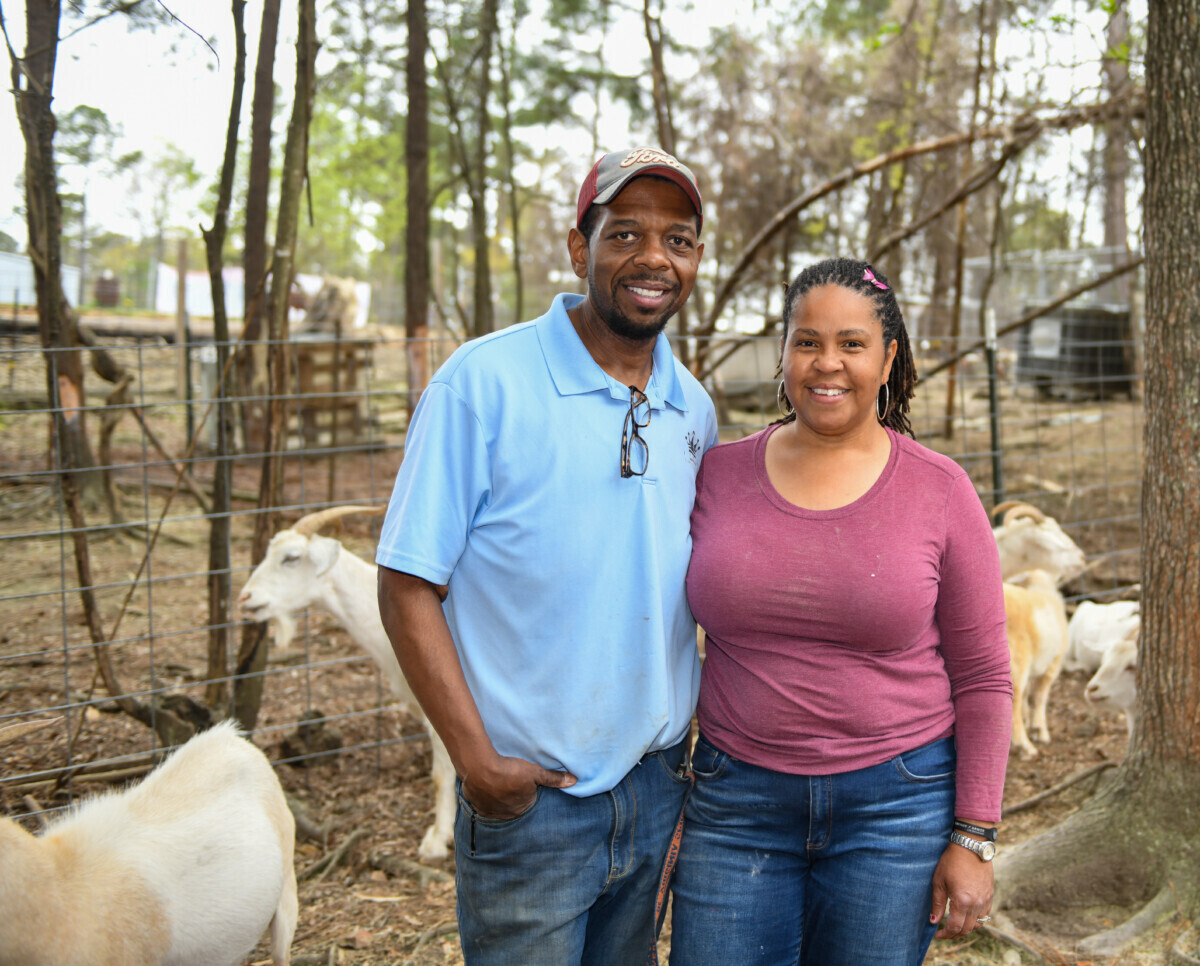
Immanuel and Valarie Jarvis, owners of Jireh Family Farm, are keeping the farming tradition alive as Food Bank partners. In just two years, Jireh Family Farm provided enough protein to fuel over 100,000 meals for families facing hunger. Their impact is immeasurable. Jireh Family Farm provides whole chicken, ground beef, and pork across the Food Bank's network of partner agencies in Raleigh and Durham. The work of Immanuel and Valarie is crucial in preserving the strong legacy of Black farmers engaged in local hunger relief efforts.
A century ago, Black-owned farms made up nearly 16 million acres of land. But following generations of violence, land theft, and discriminatory lending practices, nearly 90% of that land has been lost. Today, less than 2% of farms are owned by Black families – at a time when 1 in 4 Black households face hunger in North Carolina.
– Immanuel Jarvis, co-owner of Jireh Family FarmI think our ancestors always wanted to have an opportunity to be able to take the produce and the sweat of their brow and turn that into money to be able to support their family, to be able to have something that could pass on to their children’s children.
Visit the Jireh Family Farm store to invest in the next generation of Black farmers — and tell your representatives about the importance of reliable funding for meat and protein in our food assistance efforts.
Learn More About Jireh Family Farm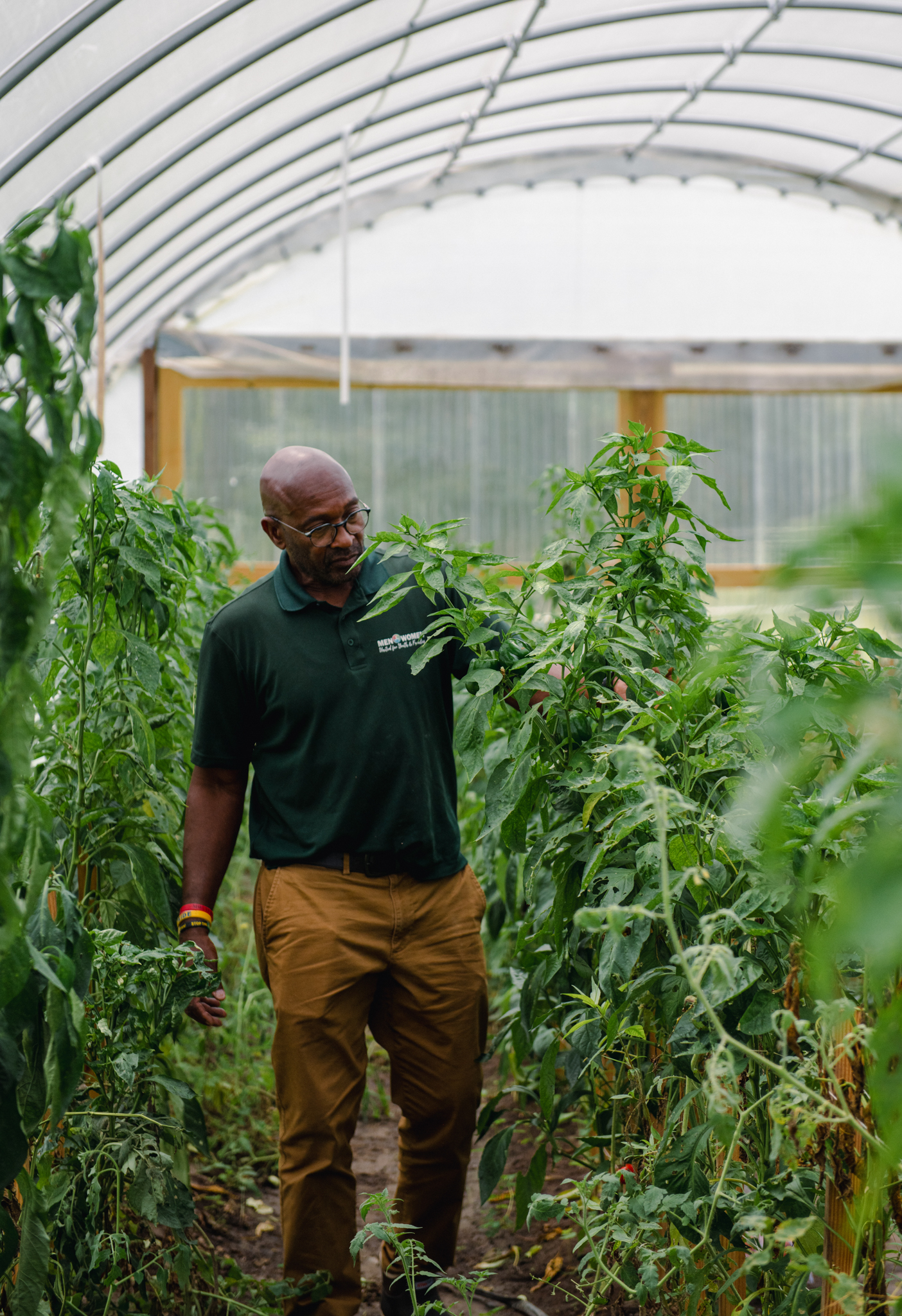
Randolph Keaton mentors Black children to become the next generation of food justice advocates. Randolph founded Men and Women United for Youth and Families (MWUYF) in 2006 to serve communities in Bladen, Brunswick, and Columbus counties.
Their program, Youth Ambassadors for a Better Community, is a youth-led initiative that grows food rooted in African farming traditions. Locally grown produce is given to families facing hunger through nonprofit partnerships. And with the Vacation Vittles program, youth are taught entrepreneurial skills by selling some of their own produce to vacationers in the Wilmington area. Youth participants have delivered locally grown food to hundreds of rental properties on the Wilmington coast.
Randolph pulls from his experience as a rural eastern North Carolina native. He's seen how hog farms in his community caused increased rates of asthma due to toxic air pollution. When Randolph first began his youth gardening program, many doubted that children with asthma could grow vegetables outside. Now, his program is thriving — young people are growing and selling their own food, and keeping the profits. Randolph's leadership and advocacy are building a more equitable food system in rural North Carolina.
Learn More About Randolph Keaton– Randolph Keaton, Executive Director of Men and Women United for Youth and Families (MWUYF)"We want to make legislators aware that youth are aware of what is happening in their communities."
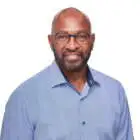
Since 2017, Lisa Perkins served as the CEO of Catholic Charities of the Diocese of Raleigh. Among the Food Bank's most longstanding partners, Catholic Charities has built an incredible infrastructure that serves a family every minute during operating hours.
As CEO, Lisa oversees services in 54 counties across central and eastern North Carolina, including Catholic Charities' Healthy Opportunities efforts, which delivered over 833,000 nutritious meals to local families. Lisa and her dedicated staff are now launching the Nourishing Our Neighbors campaign. This initiative aims to improve food pantry access by increasing mobile food distributions, hosting nutrition education programs, and creating a food truck social enterprise to sustain the work.
– Lisa Perkins, Chief Executive Officer of Catholic Charities of the Diocese of RaleighFulfilling the mission of Catholic Charities by serving the most vulnerable in our communities allows me to put my faith into action.
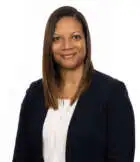
Lisa is a nationally recognized leader who received the Catholic Charities USA Management Excellence Award in 2024 for her outstanding contributions to the field. Her commitment to neighbors, volunteers, and staff erves as a model for faith-based organizations across our network.
Learn More About Lisa PerkinsAs we observe this month, please take some time to review the resources shared below to learn and explore more.
National Museum of African American History and Culture-Virtual Events
Association for the Study of African American Life and History-Black History Month Themes
Celebrate Black History Month with PBS
GLAAD Celebrates Black History Month Honoring LGBT Black Americans
NPR-The Story Behind Black History Month
Black History Month in the Triangle
25+ Important Places to Visit and Learn About Black History in North Carolina
Sign-up to receive emails with updates, resources, and ways to get involved.