Food Resources & Support for Families in Richmond County
Across Rockingham and the surrounding communities, trusted local partners are ready to welcome neighbors with dignity, care, and compassion.
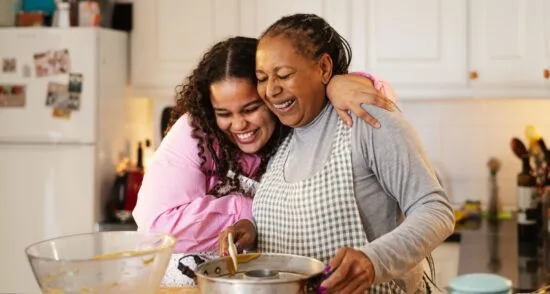
Food Bank Founder Barbara Oates was born into a tradition of service. In the late 1970s, Barbara's mother was busy running a soup kitchen in Raleigh when she asked Barbara to attend a meeting on her behalf. This meeting was a gathering of community leaders who sought to establish a food bank to provide long-term support for families facing food insecurity. Since Barbara had more time to explore this idea, she sprang into action. Barbara became our Founding Executive Director when she started the Food Bank in 1980.
– Barbara Oates Food Bank Founding Executive Director"...it was me, a card table, and a telephone...and an empty warehouse. And it worked."
The Food Bank immediately started working in rural areas where the need was the greatest. The indigenous community in Lumberton was one of the first recipients of Food Bank donations. Lumberton community leaders used Food Bank donations to distribute food through their social services network.
Four decades later, the Food Bank continues Barbara's commitment to rural communities. We now have a network of over 700 pantries, meal sites, and delivery programs across central and eastern North Carolina.
Barbara is often an honored guest at Food Bank celebrations. We are so grateful for Barbara's vision in building the foundation of our network. She often remembers how much we've grown since the Food Bank's first opening.
– Joyce "Cookie" BobbitI know practically everybody that comes through this line, and they know me. That connection makes people feel comfortable. It gives folks the space to ask for help when they need it.
We are proud to welcome Amy Beros home as the President & CEO of the Food Bank. A long-time anti-poverty advocate, Amy Beros served as a member of the Food Bank’s executive team for several years, including leadership of the campaign that established our state-of-the art headquarters and central distribution center in Raleigh. Amy Beros brings deep North Carolina roots, close knowledge of Food Bank Network operations, and decades of experience in philanthropy and strategic partnerships to the local fight to end hunger and its root causes.
In just one year, Amy has made an immeasurable impact while facing unprecedented challenges. Last year, during the longest government shutdown in this country's history, Amy worked with Governor Josh Stein to receive a $3.3 million investment in our efforts to support impacted families. Amy led our crisis response with focus and determination. During the 2025 shutdown, the Food Bank purchased fresh produce and launched mobile markets for families missing paychecks and SNAP benefits.
Through uncertainty and setbacks, Amy's commitment remains the same: "Food is available to all who need it."
– Linda Leach-Hughes Pine Knot FarmsWe found out recently that some of these senior citizens are actually not buying any food from the grocery store because they are having to save what little income they have to go towards their rent. If it wasn’t for them getting food from the Food Bank, they wouldn’t have any food at all. If that doesn’t touch your heart, I don’t know what would.
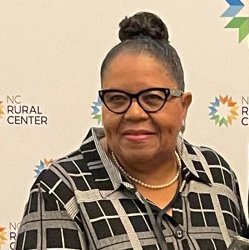
Earline Middleton has a lasting legacy at the Food Bank. In 2022, Earline retired as the Vice President of Partner Services & Public Policy following 32 years of service to our organization. As the public face for the Food Bank, Earline shattered glass ceilings as the first woman and first person of color to serve as Vice-President. During her career, Earline has played a vital role in the implementation of anti-hunger and anti-poverty legislation. She testified before the USDA, a congressional workshop, and hosted North Carolina Congressional delegations.
Under Earline’s leadership, her team greatly expanded the capacity of the Food Bank’s partner agencies. Her team launched two new child nutrition programs – Kids Cafe and Kids Summer Meals. They also advocated for the Commodity Supplemental Food Program (CSFP) to provide food boxes to seniors in our community. We are extremely proud of Earline's accomplishments as we work to continue her legacy at the Food Bank.
– Immanuel Jarvis, co-owner of Jireh Family FarmI think our ancestors always wanted to have an opportunity to be able to take the produce and the sweat of their brow and turn that into money to be able to support their family, to be able to have something that could pass on to their children’s children.
Regístrese para recibir correos electrónicos con actualizaciones, recursos y formas de participar.